
Menopause Care in the U.S.: Survey of 1,005 Women Reveals Widespread Dissatisfaction
- Nicholas DiBella
- Published: January 15, 2026
- Fact-checked by Dr. Desiree Granados
Quick Summary: Most women in the United States are not satisfied with the medical care they receive during menopause. In a nationwide survey of 1,005 women ages 45–60+, more than half reported receiving no medical treatment for disruptive menopause symptoms, and over 80% said they want better care, communication, or access.
Key Findings from Our Menopause Care Survey
| Key Finding | Statistic | Details |
|---|---|---|
| Symptom Prevalence | 96.7% | Women reported at least one menopause symptom, many disrupting daily life |
| Treatment Gap | >50% | Symptomatic women have never been prescribed or recommended medication |
| Medication Effectiveness | 60.5% | Women who received medication reported symptom relief |
| HRT Effectiveness | ~74% | Women who tried HRT reported symptom relief |
| Doctor Communication Issues | 27% | Women say their doctor does not listen well (linked to lower treatment rates) |
| Care Dissatisfaction | 82% | Women want better access, more treatment options, and clearer communication |
| Regional Variation | Varies | Access to treatment and quality of care differ significantly across the U.S., with high undertreatment in some regions |
This report presents original survey findings from The Sanctuary Wellness Institute, examines what women experience during menopause, and explains what these results reveal about the current state of menopause care in the U.S.

Menopause Symptoms Are Nearly Universal and Often Disruptive
One of the most eye-opening findings from our survey is just how few women escape menopause without discomfort.
Approximately 96.7% of respondents reported at least one menopause symptom.
Only 33 out of 1,005 participants indicated they had no symptoms at all. That means at least 972 women (96.7%) are experiencing some form of physical or emotional disruption related to menopause.
Menopause is not a quiet, subtle transition. Nearly every woman who enters this phase of life has to grapple with symptoms that disrupt daily living.
Most Common Menopause Symptoms (Share of All Respondents)
- Hot flashes: 63.1%
- Low energy: 49.0%
- Trouble sleeping: 46.5%
- Vaginal dryness: 44.1%
- Dry skin: 43.7%
- Mood swings: 40.8%
- Anxiety or depression: 39.9%
- Low libido: 36.1%
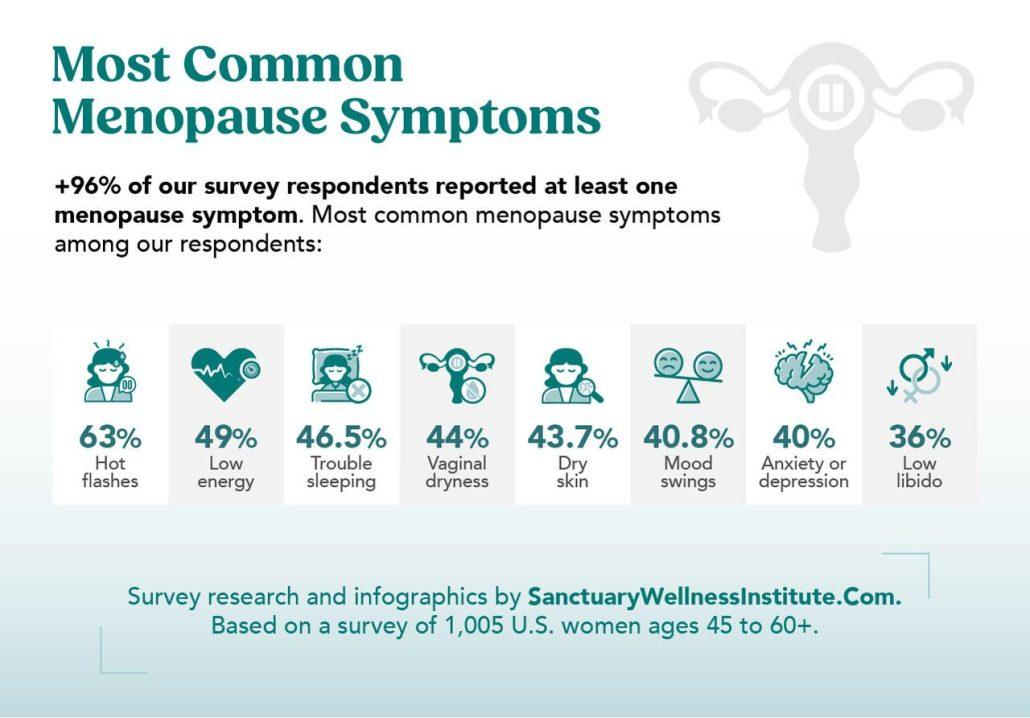
These are not fringe complaints or “small inconveniences.” They are widespread, life-shaping symptoms that influence women’s mood, work, sleep, relationships, and self-confidence.
Yet despite the near-universal nature of these symptoms…
More Than Half of Symptomatic Women Receive No Treatment
This is one of the most concerning findings from our entire survey:
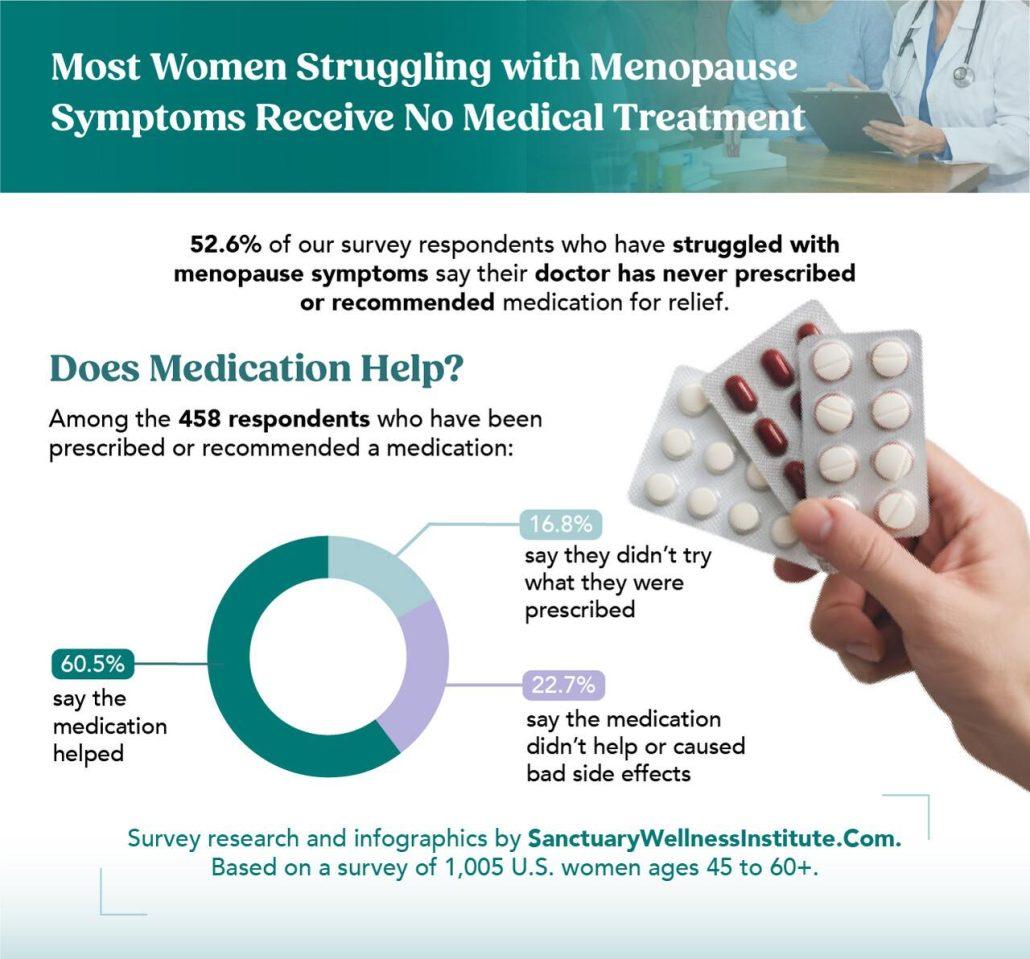
More than half (52.6%) of women with life-interrupting menopause symptoms say their doctor has never prescribed or recommended medication for relief.
The majority of women who are actively struggling with menopause symptoms are not receiving medical treatment for those symptoms, despite burdens that affect nearly every aspect of daily life.
Among these untreated women, 13% specifically shared with us that they wish their doctors would offer medication. While this is a smaller share of the group, it still represents a meaningful number of women and may reflect limited awareness of how available treatments can help.
60.5% of women who received medication say it helped with their menopause symptoms.
Among the 458 respondents who have been prescribed or recommended a medication:
- 60.5% say the medication helped
- 22.7% stopped taking it because it didn’t help or caused side effects
- 16.8% didn’t try what they were prescribed
Even when clinicians do prescribe something, the results are mixed. The majority of women (60.5%) say that their prescribed medications helped alleviate menopause symptoms. However, nearly 23% didn’t benefit from their medication and another ~17% chose not to try what they were prescribed.
We suspect that these numbers suggest a system in which menopause treatment, when offered, is often inconsistent and insufficient.
Do Doctors Take Menopause Symptoms Seriously?
Perhaps one of the most emotionally charged insights from our survey is this:
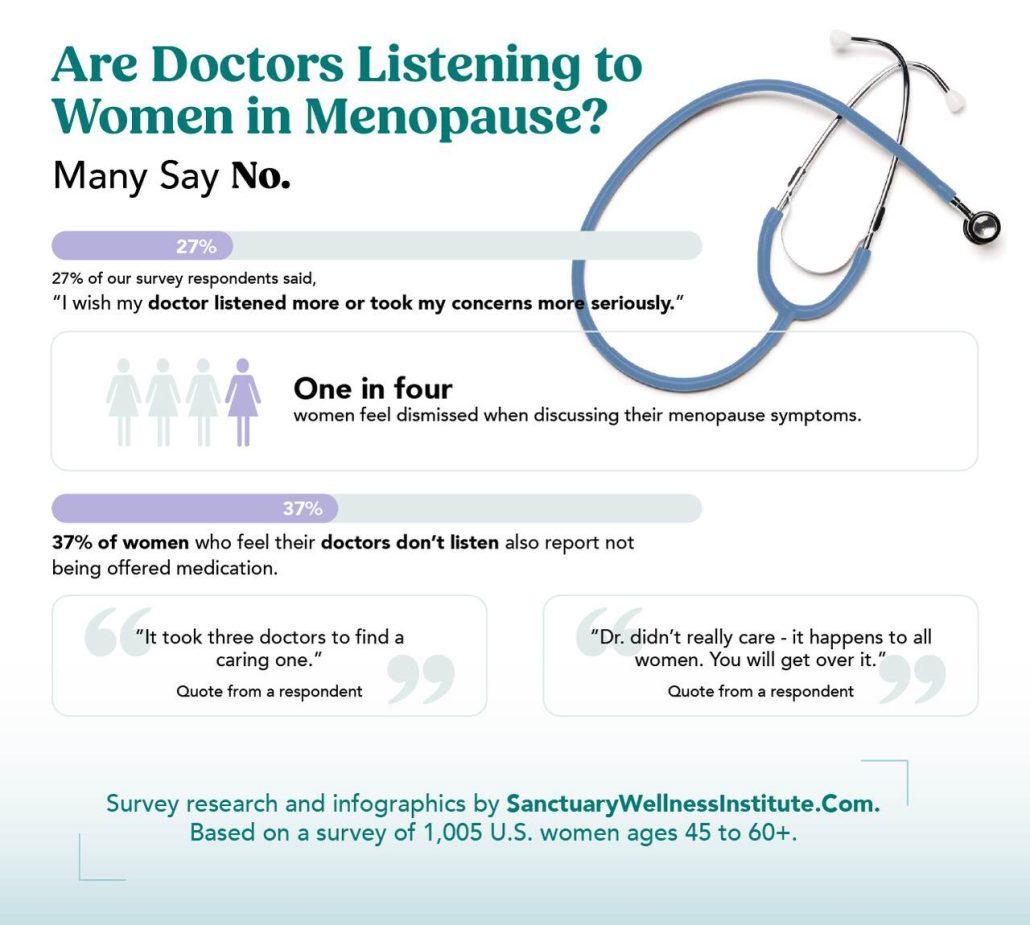
27% of respondents say they wish their doctor listened more or took their concerns more seriously.
This means that more than one in four women feel dismissed at a time when they are experiencing profound physical and emotional change.
And the data reveals a clear connection between feeling unheard and being untreated:
Among women who say their doctor doesn’t listen well, 37% were also never prescribed medication for their menopause symptoms.
This confirms something women often express anecdotally: When women feel dismissed, they are also less likely to receive treatment.
What Women Want Most From Their Menopause Care
When we asked women what they wished were better about their menopause experience, the responses were overwhelming:
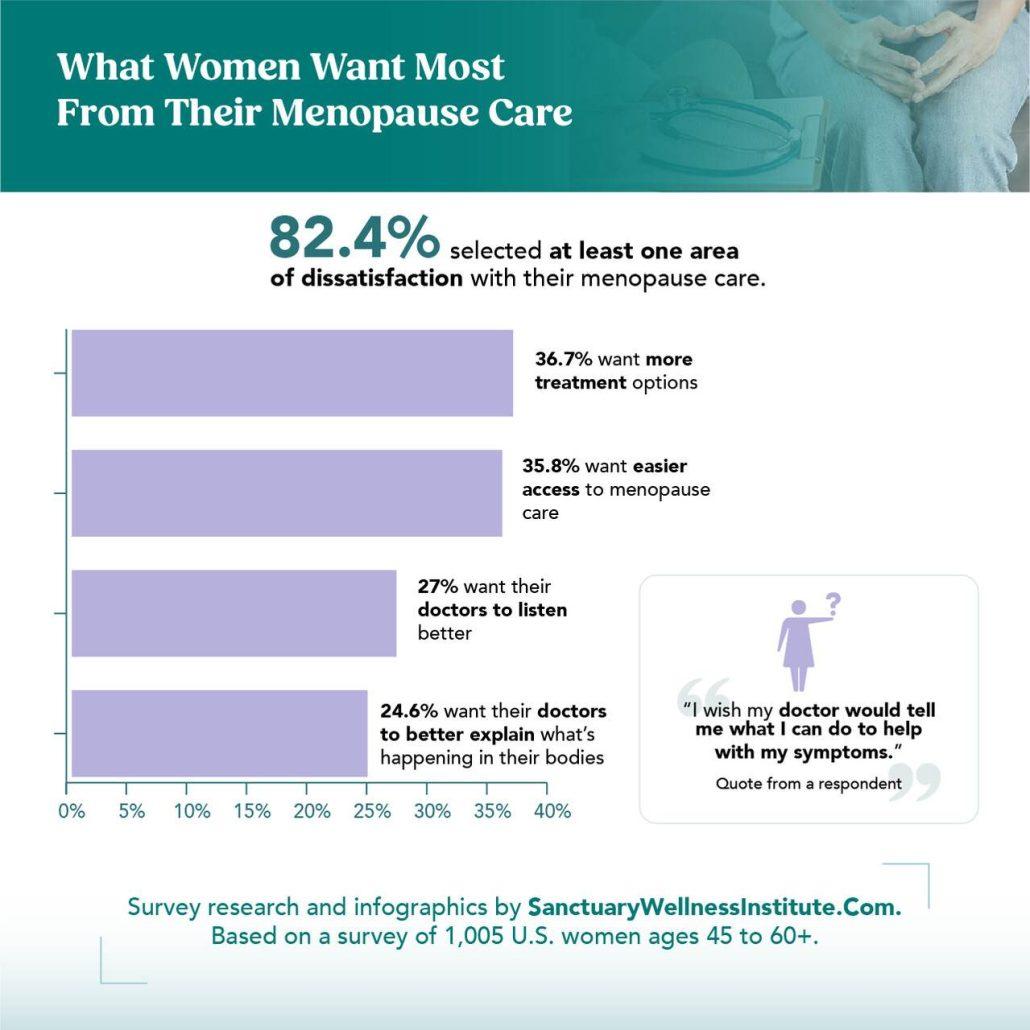
82.4%, more than four in five women, selected at least one area of dissatisfaction with their menopause care.
Here’s what they want most:
- 36.7% want more treatment options
- 35.8% want easier access to menopause care
- 27.1% want their doctors to listen better
- 24.6% want their doctors to better explain what’s happening in their bodies
These responses further underscore that the overwhelming majority of women are not happy with their menopause care. Communication with doctors, accessibility, and treatment availability are all falling short.
Voices from Women Themselves
We asked women to share in their own words about their experience of medical care during menopause. These quotes stood out:
- “It took three doctors to find a caring one.”
- “Dr. didn’t really care – it happens to all women. You will get over it.”
- “I wish my doctor would tell me what things I can do.”
- “I wish my doctor and I had even discussed menopause and post menopause!”
We found that these sentiments reflect recurring themes across our survey responses.
HRT: Women Are Interested, but Not Always Offered It
At the Sanctuary Wellness Institute, we believe that Hormone Replacement Therapy (HRT) is one of the most effective tools for managing menopause symptoms when medically appropriate. Yet our survey shows that many women who might benefit from HRT are not receiving it, or even discussing it.
HRT Experience Among All Respondents
Among our respondents, more than 68% say they have never undergone HRT.
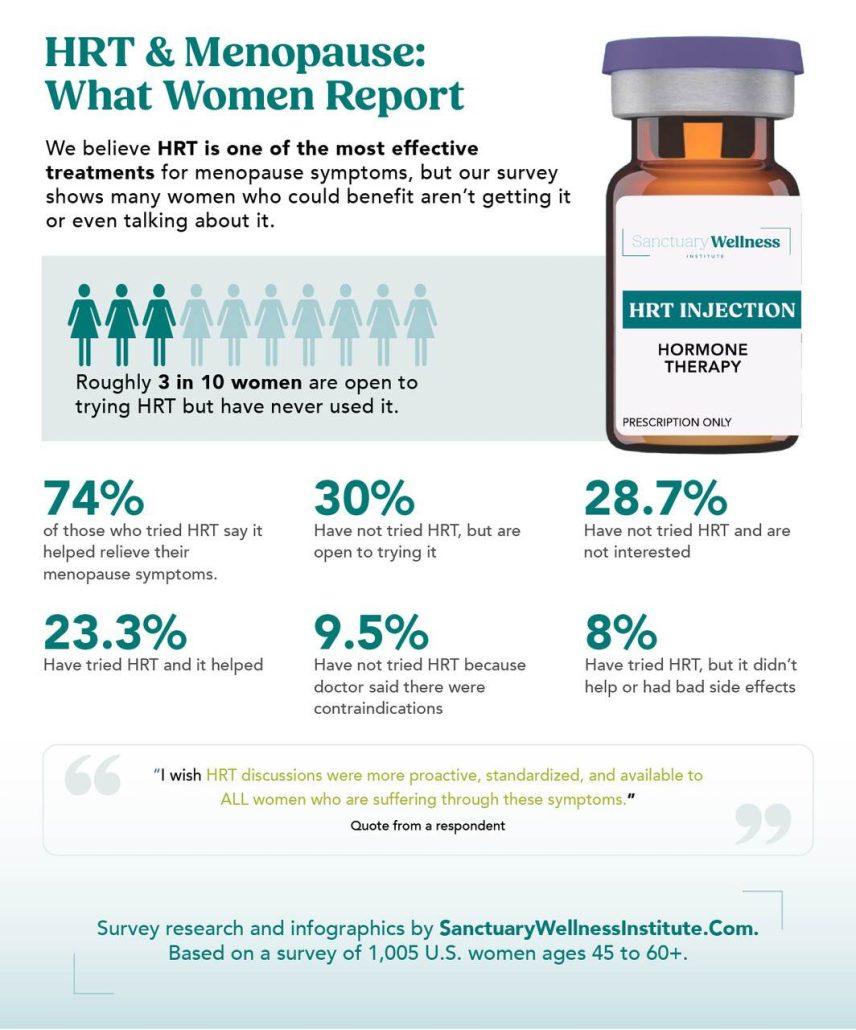
23% have tried HRT and found relief from their menopause symptoms, while 8% tried it but did not experience relief. Here’s the full breakdown from our survey:
- 30%: Have not tried HRT, but is open to trying it
- 28.7%: Have not tried HRT and are not interested
- 23.3%: Have tried HRT and it helped
- 9.5%: Have not tried HRT because doctor said there were contraindications
- 8%: Have tried HRT, but it didn’t help or had bad side effects
This reveals several important patterns:
Roughly 3 in 10 women are open to trying HRT but have never used it.
For many, this could be due to lack of access, lack of discussion with their doctor, or lack of guidance about options.
Among women who have tried HRT, ~74% say it helped relieve their menopause symptoms.
The great majority of women who have undergone HRT for menopause-related symptoms experienced relief as a result, while 26% did not experience relief or suffered from negative side effects.
This suggests that when HRT is offered thoughtfully and monitored appropriately, it can offer significant relief consistent with what many women report anecdotally.
Yet despite its potential, women told us repeatedly that doctors were hesitant to discuss HRT, or dismissed it outright without a meaningful conversation.
As one respondent said:
“I wish HRT discussions were more proactive, standardized, and available to ALL women who are suffering through these symptoms.”
The Benefits of HRT for Women in Menopause
Hormone replacement therapy (HRT) is a treatment that increases levels of estrogen or progesterone as they decline during perimenopause and menopause. It is available as pills, patches, gels, sprays, and vaginal creams or rings, and each option delivers hormones in a steady, controlled way.
HRT can help:
- Reduce hot flashes and night sweats
- Improve sleep
- Restore vaginal lubrication
- Boost energy and mood
- Support cognitive function
- Address low libido
- Create overall hormonal balance
At the Sanctuary Wellness Institute, many patients tell us that their previous doctors did not take the time to tailor HRT dosage or delivery methods to their needs. Our providers take a different approach. We calculate an appropriate starting dose, monitor how your body responds, and adjust over time to make sure you receive the right level of support. A dose that is too low may not provide meaningful relief, while a dose that is too high can lead to unwanted side effects.
Of course, HRT is not right for everyone. Some medical contraindications are legitimate reasons to avoid it. But when used thoughtfully and tailored to individual needs, HRT can be a powerful tool for reclaiming comfort, vitality, and wellbeing during menopause.
Where You Live Shapes Your Menopause Experience
One of the most striking findings in our survey was the regional differences in prescribing rates, access barriers, and overall dissatisfaction.
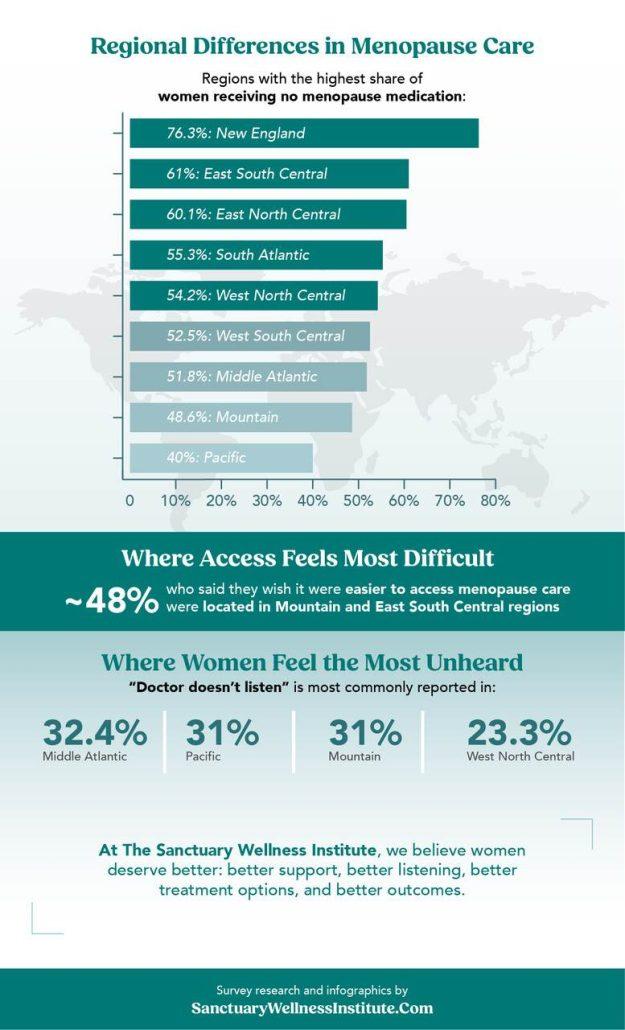
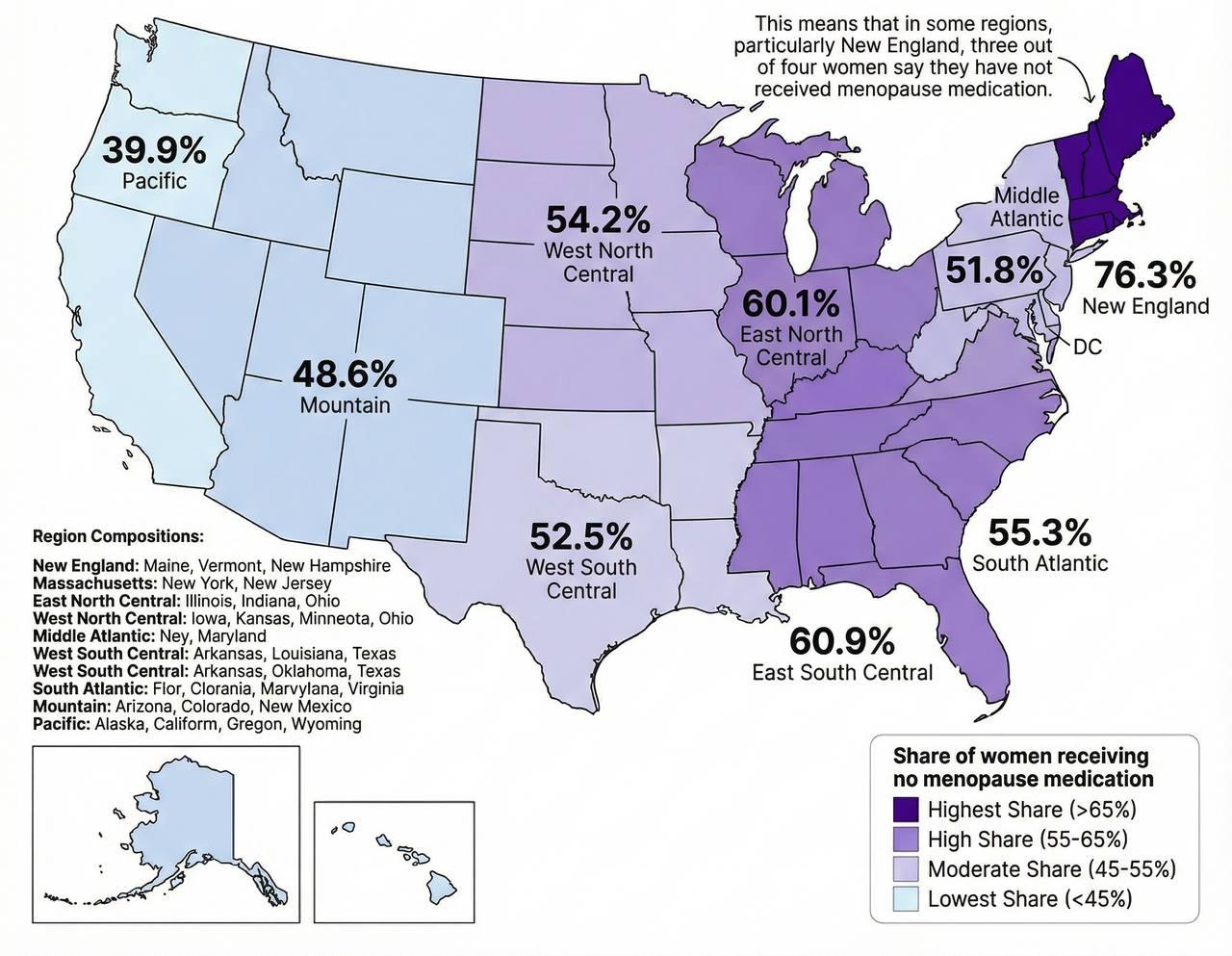
Regions with the highest share of women receiving no menopause medication
- 76.3% – New England (CT, ME, MA, NH, RI, VT) — Highest undertreatment rate in the U.S.
- 60.9% – East South Central (AL, KY, MS, TN)
- 60.1% – East North Central (IL, IN, MI, OH, WI)
- 55.3% – South Atlantic (DE, DC, FL, GA, MD, NC, SC, VA, WV)
- 54.2% – West North Central (IA, KS, MN, MO, NE, ND, SD)
- 52.5% – West South Central (AR, LA, OK, TX)
- 51.8% – Middle Atlantic (NJ, NY, PA)
- 48.6% – Mountain (AZ, CO, ID, MT, NV, NM, UT, WY)
- 39.9% – Pacific (AK, CA, HI, OR, WA) — Most likely region to receive medical treatment
U.S. regions are defined according to standard Census Bureau regional classifications.
This means that in some regions, particularly New England, three out of four women say they have not received menopause medication.
Where Access Feels Most Difficult
In the Mountain and East South Central regions, about half of respondents (~48%) say they wish it were easier to access menopause care.
Whether due to provider shortage, cost, scheduling limitations, or distance, women in these regions face especially steep barriers.
Where Women Feel the Most Unheard
“Doctor doesn’t listen” is most commonly reported in:
- Middle Atlantic: 32.4%
- Pacific: 31%
- Mountain: 31%
- West North Central: 30.5%
Across the country, women are experiencing very different levels of support, suggesting a fragmented and inconsistent menopause care landscape.
Conclusion: What This Survey Reveals About Menopause Care in the U.S.
Based on our survey, the answer is clear:
Most women are unhappy with their menopause care.
And here’s why:
- Over 96% of women experience life-interrupting menopause symptoms
- More than half of symptomatic women receive no medication
- 82% want improvements such as better listening, more treatment options, clearer explanations, and easier access to care
- HRT is under-discussed and underutilized, despite strong reported benefits
- Women in New England face disproportionately high rates of undertreatment
The data reveals a nationwide pattern of women being dismissed, ignored, or inadequately treated during one of the most physically transformative stages of their lives.
How The Sanctuary Wellness Institute Helps Women Through Menopause
At The Sanctuary Wellness Institute, we believe women deserve better: better support, better listening, better treatment options, and better outcomes.
We understand that menopause is not “just a phase” to get through. It is a biological transition that affects nearly every dimension of life, and it deserves expert, compassionate care.
Our individualized hormone replacement therapy plans are tailored to your symptoms, medical history, personal health goals, and hormonal profile. Our providers take the time to talk with you thoroughly and respectfully, rather than rushing through a brief appointment, so your treatment truly reflects your needs.
Because many women struggle to access menopause care, we offer flexible scheduling, accessible pricing, and telemedicine to remove as many barriers as possible.
Our goal is to help women move through menopause with confidence, comfort, and clarity. Women deserve better care, and at The Sanctuary Wellness Institute, we are committed to providing it.
Methodology and Fair Use
In November 2025, we surveyed 1,005 American women about their experiences with menopause care. Respondents ranged in age from 45 to 60+, with 77% between ages 45 and 60. The survey was conducted via an online panel administered by a third-party research provider; survey questions and demographic parameters were designed by Sanctuary Wellness Institute. Based on the sample size, the survey has an approximate margin of error of ±3.1 percentage points at a 95% confidence level, assuming a random sample. Results are directional and subject to standard survey limitations.
When using or referencing this data, please attribute the research by linking to this study and citing SanctuaryWellnessInstitute.com.
Frequently Asked Questions (FAQ)
According to our survey, most women are not satisfied with menopause care. More than 82% of respondents reported at least one area of dissatisfaction, including limited treatment options, poor access to care, and inadequate communication with doctors. Many women feel their symptoms are not taken seriously and that their needs are not being met during menopause, despite experiencing significant physical and emotional changes.
According to our survey, many women feel doctors do not take menopause seriously enough. About 27% of respondents said their doctor does not listen well or take their concerns seriously. This lack of attentiveness is strongly linked to lower treatment rates, suggesting that feeling dismissed often results in women not receiving medication or meaningful care for their symptoms.
According to our survey, menopause is undertreated due to a combination of poor communication, limited access to specialized care, and lack of proactive treatment discussions. Over half of women with symptoms were never prescribed or recommended medication. Many respondents reported feeling dismissed by doctors or never having menopause discussed at all, which contributes to widespread undertreatment.
According to our survey, about 31% of women have tried hormone replacement therapy (HRT). Specifically, 23.3% tried HRT and found relief, while 8% tried it but did not benefit or experienced side effects. More than 68% of women have never used HRT, though many are open to trying it if given proper guidance and access.
Research has demonstrated that HRT helps many women manage menopause symptoms. According to our survey, among women who tried HRT, 74% reported symptom relief. This makes HRT one of the most effective treatments reported in the survey, especially for symptoms like hot flashes, sleep disruption, and vaginal dryness, when prescribed appropriately and monitored by a knowledgeable provider.
According to our survey, only about 47% of women with menopause symptoms have been prescribed or recommended medication. This means 52.6% of symptomatic women receive no medical treatment at all, despite nearly all respondents reporting at least one disruptive symptom. This highlights a significant gap between symptom burden and actual care received.
How we reviewed this article:
Current Version
January 15, 2026
Written By
Nicholas DiBella
Fact-checked By
Dr. Desiree Granados
Editorial Process
Our Editorial Process







Nicholas DiBella received his psychology degree from West Chester University of Pennsylvania and has been writing content for the Sanctuary Wellness Institute since 2023. He is passionate about all things health & wellness.