
- Fact-checked by Dr. Desiree Granados
Quick Summary: Hormone replacement therapy (HRT) can mitigate menopause-related hair thinning by stabilizing estrogen and progesterone levels, improving hair follicle health and reducing the impact of hormonal fluctuations that contribute to hair loss.
Hair loss is one of the lesser-discussed symptoms of menopause, yet it can have a significant emotional and physical impact. Many women notice their hair becoming thinner, drier, or more brittle as they transition through menopause. These changes are primarily caused by shifting levels of the estrogen and progesterone hormones, which influence hair growth and regeneration.
Many women are turning to hormone replacement therapy (HRT) to help stop hair loss and bring back shine and strength. Let’s take a closer look at how hormones shape your hair health and how HRT can help you feel like yourself again.
Understanding the Connection Between Hormones and Hair
Hormones are deeply intertwined with the health of your hair. Throughout a woman’s life, estrogen and progesterone help keep hair thick, full, and in its growth phase longer. These hormones also promote circulation to the scalp and support the delivery of nutrients to hair follicles.
As women enter menopause, estrogen and progesterone levels begin to decline. This hormonal shift allows androgens, such as testosterone and its more potent form, DHT, to have a stronger effect on hair follicles.
DHT binds to receptors in the scalp, shrinking hair follicles and shortening the growth phase of the hair cycle. Over time, this leads to thinner, weaker hair that sheds more easily.
This type of hair loss, often called female pattern hair thinning, typically appears as diffuse thinning along the top and crown of the scalp rather than complete baldness. Many women find this change gradual but distressing, as it can affect both appearance and confidence.
How HRT Can Help with Hair Loss During Menopause
HRT works by replenishing declining hormone levels, restoring balance and helping counteract the effects of androgens on the hair follicles. By maintaining more stable levels of estrogen and progesterone, HRT can help extend the growth cycle of your hair, strengthen existing follicles, and reduce shedding.
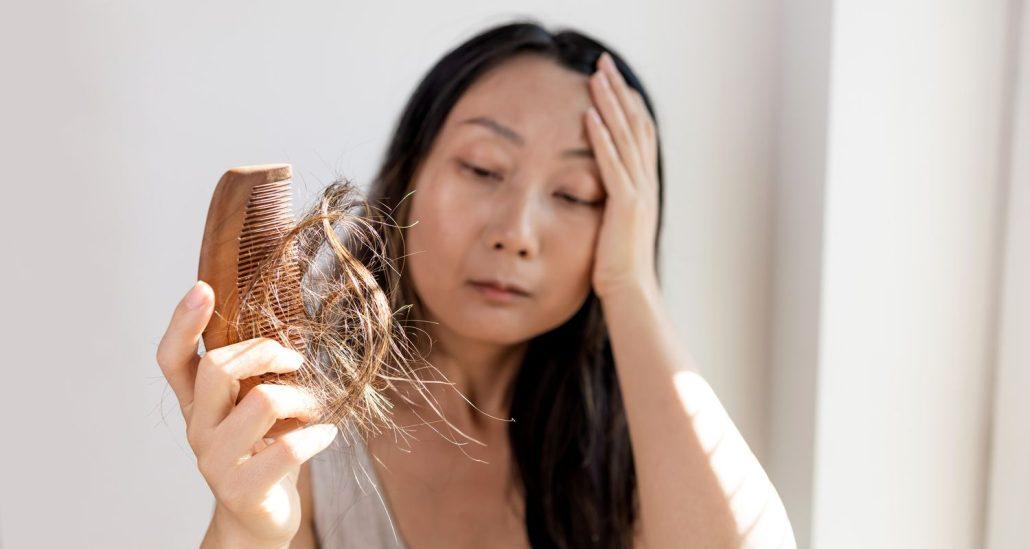
Many women report that after several months on properly balanced HRT, their hair feels thicker, shinier, and more resilient. Some notice less hair left behind in their brush or shower drain, while others experience visible improvements in volume and texture.
It’s important to remember that HRT’s effectiveness depends on individual factors such as genetics, overall health, and how early treatment begins. While HRT may not fully reverse hereditary hair loss, it can slow down thinning and promote better hair quality over time.
Other Benefits of HRT for Menopausal Health
While many women explore HRT for hair health, its benefits often extend far beyond that. By restoring hormonal balance, HRT can also alleviate symptoms such as:
- Hot flashes and night sweats
- Mood swings or irritability
- Sleep disturbances
- Vaginal dryness and discomfort
- Loss of bone density
Since these symptoms often occur alongside hair changes, women who start HRT may experience an overall improvement in their sense of well-being, energy, and vitality. Healthier hair is often a reflection of what’s happening inside; and balanced hormones play a key role in that transformation.
Supporting Hair Health While on HRT
While HRT can help regulate hormones, it’s most effective when combined with healthy lifestyle habits that nourish your scalp and body. Consider these steps to support your results:
- Regularly monitor hormone levels with your provider to ensure your HRT dosage remains optimal. Hormonal balance is dynamic, and your needs may change over time.
- Eat a nutrient-rich diet emphasizing lean proteins, leafy greens, whole grains, and healthy fats. Nutrients like biotin, zinc, iron, and vitamin D are essential for strong, healthy hair.
- Stay hydrated and manage stress. Chronic stress can raise cortisol levels, which can disrupt the hair growth cycle. Mindfulness practices, yoga, or daily walks can make a big difference.
- Use gentle hair care products that protect rather than strip your hair. Look for sulfate-free shampoos and conditioners designed for thinning or mature hair.
- Prioritize scalp health. Regular scalp massages can improve circulation and help nutrients reach the follicles more efficiently.
- Discuss supplemental treatments such as minoxidil, low-level laser therapy, or platelet-rich plasma (PRP) injections with your provider if hair thinning continues despite HRT.
Together, these strategies create a supportive foundation for long-term hair vitality during menopause and beyond.
Conclusion
Hair loss during menopause can be both frustrating and emotional, but you don’t have to face it alone. Hormonal changes are a natural part of aging, and HRT offers a proven, effective way to restore balance and support hair health. When combined with good nutrition, proper scalp care, and stress management, many women see their hair, and their confidence, begin to thrive again.
If you’re struggling with menopausal hair loss or other symptoms, the team at The Sanctuary Wellness Institute is here to help. Our experienced professionals can guide you through your options and develop a plan that helps you feel like yourself again.
How we reviewed this article:
- Chin H. Ho, et al. (2024). Androgenetic Alopecia
https://www.ncbi.nlm.nih.gov/books/NBK430924/ - Yujiro Endo, et al. (2023). Clinical and phototrichogrammatic evaluation of estradiol replacement therapy on hair growth in postmenopausal Japanese women with female pattern hair loss: a pilot study
https://pmc.ncbi.nlm.nih.gov/articles/PMC10615536/ - NHS (2023). About hormone replacement therapy (HRT)
https://www.nhs.uk/medicines/hormone-replacement-therapy-hrt/about-hormone-replacement-therapy-hrt/ - Erling Thom (2016). Stress and the Hair Growth Cycle: Cortisol-Induced Hair Growth Disruption
https://jddonline.com/articles/stress-and-the-hair-growth-cycle-cortisol-induced-hair-growth-disruption-S1545961616P1001X/
Current Version
October 24, 2024
Written By
Nicholas DiBella
Fact-checked By
Dr. Desiree Granados
Editorial Process
Our Editorial Process







Nicholas DiBella received his psychology degree from West Chester University of Pennsylvania and has been writing content for the Sanctuary Wellness Institute since 2023. He is passionate about all things health & wellness.